
Our body-workers take the guesswork out of what areas need the most attention to bring the body back to center where all joints sit in their middle range of motion.
Owner, Meso Fit | C0-Creator, The R.A.M.P Method
Alison is dedicated to tweaking her own movement patterns with practical approaches she spent a career honing. This led her to co-create The RAMP Method. What sets Alison apart is her instruction that encourages personal best and holistic integration, while her empathy for her clients permeates every set. She meets you exactly where you are, and has made a welcoming environment at Meso Fit studio for clients to develop practical fitness goals and healthy habits.
>
“Current understanding of joint motion continues to indicate a need to restore joint glides as well as rotations when attempting to improve joint mobility.”


The RAMP Method attempts to reconcile any disconnects between movement desire (I want to ski black diamond), and the movement resources (muscles) the brain has available to complete the task. When desire overcomes resources, we move at a deficit, and the cumulative injury process begins. This is why the injury event (I pulled my back showering) can never be labeled as the cause, because each step taken with misaligned joints moves us toward gradual power loss and eventual system breakdown.
The brain only understands and can utilize patterns. Reams of paper exist on the power of facial recognition in both monkeys and humans, which proves the brain prefers patters over isolation. We can no longer afford to stretch and strengthen without a more thorough understanding of the brain’s intent, which is to make us stable enough, both physically and mentally, to face the challenges of an unstable world. And it does this through powerful movement patterns. As we age, muscle and joint restrictions slow the brain’s ability to access patterns it once did, and destabilizing forces cause us to fall more.
The brain remains our greatest resource when trying to improve the body with exercise. But when the brain is limited by joint restrictions caused by muscle imbalance, it’s movement resources dwindle, and it expends more energy to get even menial tasks done. So it shouldn’t surprise us when we ask restricted brains to exercise, they do so reluctantly, or even kicking and screaming.
Neuroplasticity is the brain’s ability to reorganize itself by forming new neural connections throughout life. It allows the nerve cells in the brain to compensate for injury and disease and to adjust their activities in response to new situations or to changes in their environment. The ramifications of this when applied to movement seems clear; if the brain has limited resources, then it has to rewrite its own movement software, and favor a path of least resistance. This effects the brain’s ability to maintain this ‘plastic’ state throughout the lifespan, and may better explain the gradual decline in overall function as we age.
Stimulating the brain in training means keeping the brain in contact with farthest points of our body, the hands, feet fingers, and toes. Nerve compression caused by imbalanced muscle systems affect the brain’s ability to move the body. The following programming is designed to strengthen the neural connections between the brain, core, feet, and hands. The goal is to show how to use The RAMP Method to re-pattern the brain so it utilizes hip and shoulder rotation more efficiently.
Whether it’s reaching for a stapler to swinging a club or stick, spinal integrity must be maintained throughout all movement. When the brain has more resources available, it allows more power generation. So to improve in any sport or life function takes managing and creating as much flexion, extension, and rotation as possible; but also making sure those actions emanate from the joints best suited to create them.
Without full joint range of motion and alignment, the brain is forced to use limited neural pathways to move. Restoring full flexion, extension, and rotation to the body starts with carefully weeding out any and all compensations so the body moves more aligned. This is the only way to increase power output.
(Foot video)
The RAMP Method RSC (Release-Stretch-Contract) Protocol addresses specific muscle imbalances that occur between joints.
See below for more information on RSC Programming:
https://mesofitboca.com/blog/2019/9/15/release-stretch-contract-rectus-femoris
https://mesofitboca.com/blog/2019/9/21/release-stretch-contract-the-gastroc
https://mesofitboca.com/blog/2019/9/30/1ajj1f4pbjfiyensij5nett0pjomax

Engaging in any organized sport usually requires strong rotation and/or fast and decisive changes of direction. The ability to pivot on the balls of the feet while rotating at the hip takes equal push and pull. Prior reading: https://mesofitboca.com/blog/2019/8/22/bucket-theory
Any restriction in flexion, extension, or rotation, will downgrade the brain’s power producing ability in any sport. The RAMP Method accomplishes the all-important task of restoring these joint actions to full capacity.
But movement is always of combination of mobility and stability. Too much of one and not enough of the other, and gravity becomes your enemy. So how can we avoid the peril of gravity once we become imbalanced?
Bucket Theory postulates that the only way to avoid this is to utilize the abundance of mobility available in the hips and shoulders through a stable a torso. When the spine moves, the hips and shoulders give up mobility to help stabilize. This outside-in-approach weakens the core’s ability to tense in favor of giving the length required to move the spine.
To flip this situation, the core needs to become the hub of all movement, and ultimate mobility must reside in the hips, shoulders, and ankles. The core must be included in EVERY exercise to achieve the stable base required for all movement. Excess mobility in the absence of equalizing stability is a recipe for disaster in any situation, but becomes quality-of-life threatening when the brain is unable to provide stable bases.
While The RAMP Method assessment reveals potential restrictions that effect the brain’s ability to produce power, it also considers the broader changes that occur globally throughout the movement system. Compounded restrictions overtime leads to rapid declines in function, as the brain is forced to downgrade power production in favor of keeping the overall system safe. Our goal is to reconnect the brain with all parts of the body, that connectedness can only emerge from a brain that has access of all joint ranges of motion.
To maintain optimal levels of functioning throughout the lifespan, exercise has to contribute to life outside the gym. Our Signature Series of exercises, in the text and below, continue to show promise in creating the longevity everyone looks for when engaged in stimulating physical and mental activity. To keep the brain and body active means creating programming that engages and connects the two, not separate activities that we hope will come together once we strap on skis, wheels, and helmets.
The RAMP Method Rotational Series addresses lost hip and shoulder rotation with exercises designed to keep the spine stable and straight (or neutral) while ensuring rotation only emanates from the targeted areas. The core response is undeniable as these exercises help the core deal with, and manage, extremity rotation. Our programming bridges the gap between brain and body with movement patterns that coordinate movement systems, and create harmony among aligned joints.
Restore rotation to the shoulders and hips.
Align rib and hip.
Maintain torso integrity throughout all exercise.
Progress to multi-joint pivoting and rotational exercises.
Any imbalance between the internal and external rotators of the hips and shoulders will produce misaligned extremities, slouching, and will contribute to lower back, hip, knee, and ankle pain.
We start with the transverse arch of the foot because few places in the body offer such a rich proprioceptive environment; and improving foot function can pay big dividends when attempting to improve movement, or relieve pain, anywhere above the foot and ankle.
Millions of years of evolution created a perfectly arched foot capable of traversing any terrain. Any improvements made above the arches without simultaneously enhancing the way the arches react to the ground will be short-lived. Longterm, sustainable, change comes with improved neuromuscular connections between brain and foot.

Pivot Pattern
Transverse Lunge
Transverse Throw Pattern
Additional reading: https://mesofitboca.com/blog/2019/10/15/6oiv6tdjqrvsjncwd42wdgty0rhxtl
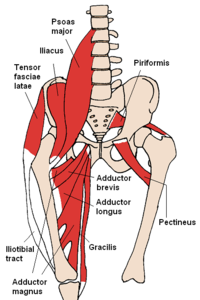
Hip External Rotators: Gluteus maximus, Piriformis, Gemellus superior and inferior, Obturatorius externus, Quadratus femoris, Sartorius, Gluteus Medius (posterior).
Hip Internal Rotators: Tensor Fascia Latae, gluten medius and minimus (anterior), Adductor longus, brevis, and magnus, Pectineus, Piriformis (with hip flexed)

Shoulder External Rotators: Infraspinatus, Teres Minor, Posterior Deltoid
Shoulder Internal Rotators: Subscapularis, Anterior Deltoid, Pectoralis Major, Latissimus Dorsi, Teres Major

To keep the brain engaged in exercise we need to challenge it in ways the world would if we were outside running towards food, or away from being food. This is the truest way to enact the same impulses that force the brain and body to connect to produce power. The brain/body connection cannot be strengthened through isolating any part of the body to strengthen it, it must be attached to a plan to incorporate weak joint movements into all other m movements. The time for thinking about individual muscles has only proven to work aesthetically. There is no evidence of the brain’s interpretation of our attempts to train the body to move better. It seems more pertinent to train the way the brain ‘thinks’ and move in, and against, patterns.
If the brain and central nervous system do not have access to all movement patterns, power is downgraded. We use The RAMP Method to expand reach and strengthen withdrawal (see The RAMP Method text). This takes repatterining the brain to move by coordinating joint systems from left to right, diagonally, top to bottom, and same-side. This is why each client needs to restore the hip and shoulder rotational patterns shown above before attempting the exercises below.
External-diagonal
Internal-same-side
Once the brain has new movement patterns, or movement options, power in increased, daily living is easier, workouts are easier. Connect the brain and body through smart exercises that utilize lower and upper body movement patterns: Upper body rotational holds W/Lower body flexion-extension.
Lunge in shoulder external rotation upper-middle-lower (holds)
Lunge in shoulder internal rotation upper-middle lower (holds)
Lunge into shoulder flexion (clav chest)
Step up in all of above.
These exercises should be incorporated as part of the warm-up, or muscle activation part of any workout. As theses patterns improve and get stronger, advance to more challenging exercises (shown below).
Lunge rear lateral
Split squat rear lateral
Split squat plate lift (adducted)
Landmine squat into rotation
Lunge Clavicular fly
Cable deadlift into rear lateral
Squat into shoulder IR
Emerging evidence suggests that the brain organizes movement into slings to create specific and powerful patterns. These slings seem ideally placed to protect the lumbar and SI portions of the spine:
https://mesofitboca.com/blog/2019/7/14/anterior-and-posterior-oblique-slings-

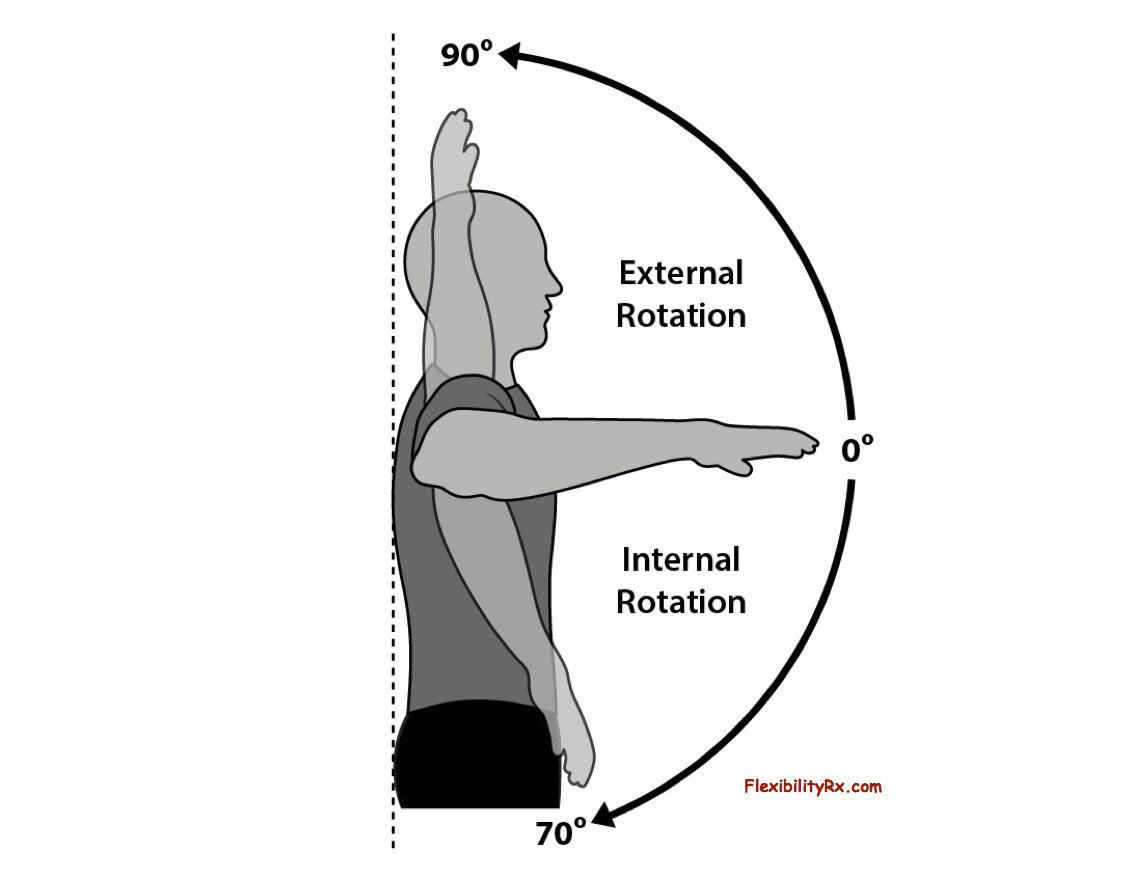
At Meso Fit Studio, we value our clients time and effort by developing exercises that get results fast, often within a workout. The exercises below re-pattern the brain to rotate at the shoulder and minimize rotation at the elbow.
For shoulder external rotation use a dumbbell to provide feedback whenever the wrist attempts to create this movement. Once the wrist is stable, rotate the elbow upward in a sweeping motion and hold. Try bringing the elbow higher each rep assuring the wrist or ribcage don’t compensate in the process.
3 sets of 8-12
For shoulder internal rotation, use a band mounted to a TRX anchor, or place a band handle inside a door frame and close the door. Sweep the elbow toward the floor against the pull of the band, then return the starting position resisting the bands pull.
3 sets of 8-12 reps

In Part 6 we explore further ways to activate and strengthen the hip external and internal rotators. Below are further examples of the unique approach we take at Meso Fit Studios that develop stronger rotation in the hip and shoulders, thereby creating stronger, more stable spines.
To load the external rotators of the hip and explore length in the internal rotators, use this banded exercise.
Allow the band to pull the femur (thigh bone) into internal rotation, and then push lightly into the band to load external rotation.
3 sets of 8-12 reps
To load the internal rotators of the hip and explore length in the external rotators, use this banded exercise.
Allow the band to pull the femur (thigh bone) into external rotation, and then push lightly into the band to load internal rotation.
3 sets of 8-12 reps.
We cap our rotational series with an exercise that ties it all together: The Throw. Start each version slowly, and increase fluidity and precision:
This version sets the pattern. With each turn, try not to put much bodyweight into the turning foot to maintain a greater core response.
3 sets of 10-12 minimally loaded until the pattern is consistent and sealed, 3X per week. After 2 weeks, add 3 sets of:
This version has you keep the legs stationary as you turn.
3 sets of 10-12 included with The Throw
After 2 weeks add 3 sets of:
Bodyweight should be evenly distributed to both feet.
3 sets of 10-12
In this shoulder progression we add a turn of the lower extremity that forces the internal and external obliques to stabilize the torso.
Rotation of the spine should be contained and relegated to the hips and shoulders.
Keep the foot turning out minimally loaded.
Perform 3 sets of 8-12 reps
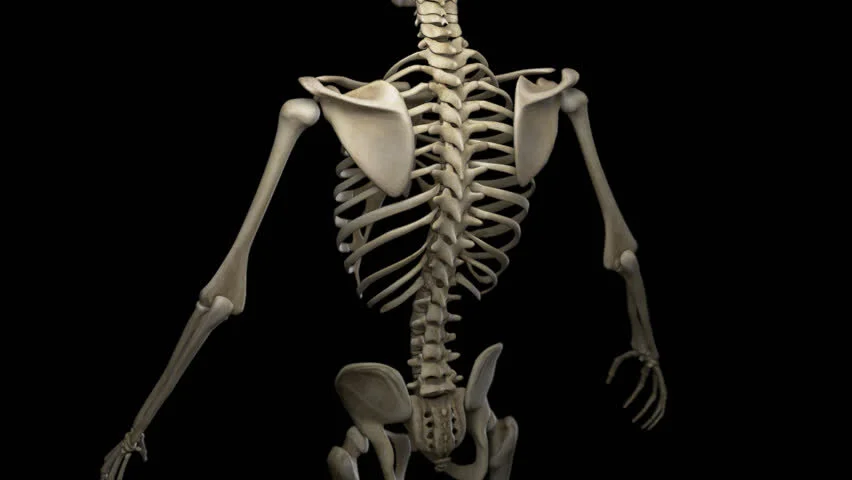
In this phase we strengthen the adductors ability to keep the femur (upper thigh bone) as stable as possible.
A light band is placed above the knee to activate the adductors and core; while a heavier pull band (shown below) is used to create hip internal and external rotation.
Keep the spine flat on the mat while the femur rotates. Use less band pull or regress back to the foot only version presented in Part 1 if the femur or spine cannot be stabilized.
The left and right adductors, when adequately contracted, will also activate the internal and external obliques.
Perform 3 sets of 8-12 reps.
The best movers change direction fast and that takes properly rotating from the right places.
At Meso Fit Studio, our exercises restore lost rotation to the hips and shoulders and remove it from the spine.
Below are exercises that target the internal and external rotators of the shoulder.
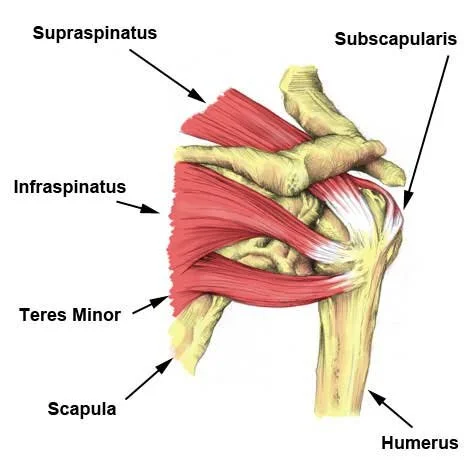
As with the hip exercises in Part 1, the humerus (upper arm bone) must remain the pivoting point and remain steadfastly still throughout the exercises.
Perform 3 sets of 10 per side.
At Meso Fit Studio we:
Remove compensated rotation.
Restore rotation in the hips and shoulders.
Strengthen rotation.
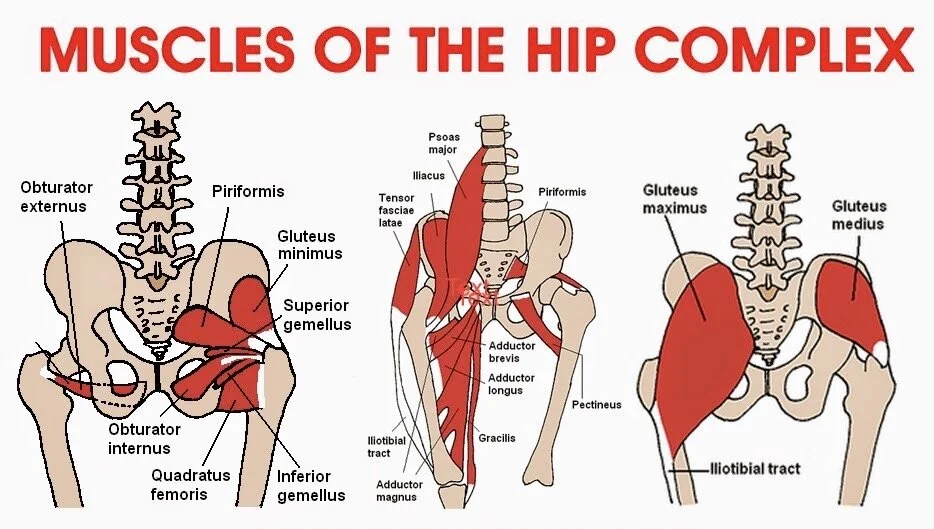
These are repatterining exercises we designed for the hip. For more info see: https://mesofitboca.com/blog/2019/8/22/bucket-theory
In this exercise, the femur (upper leg bone) must remain the pivoting point and remain steadfastly straight and still throughout all exercises.
Perform 3 sets of 10 per side


